


Parasites are constantly present in the human body.These can be pathogenic worms and amoebas, and protozoa that do not cause disease and sometimes help to cope with the bacterial flora.A threat to health is parasites that feed on the host, damage internal organs and disrupt the functions of vital systems.
Classification of human parasites
Human parasites can be of several types.Protozoa, arthropods and helminths live mainly inside the body and on its surface.Some organisms are constant companions of people, others use them as a temporary reservoir for the transition to the next stage of development.
True parasites cannot live without a host and die in a free environment.False can be felt in the same way in the human body, on the ground, in the water and in the surrounding objects.There are also hyperparasites that settle inside similar creatures and live off them.Depending on the location, parasites are divided into:
- Interior.These are endoparasites that feed on intestinal fluids, organ tissues, blood and lymph.
- External.They are called ectoparasites, they live in the body, in the hair and in the folds of the skin.
- Cloth.Their habitat is internal organs (liver, heart, lungs, gall bladder, brain).
- Cavity.These parasites live, feed and reproduce in the intestines and stomach.
- Intracellular or blood.They are usually microscopic in size and are found in biological fluids.
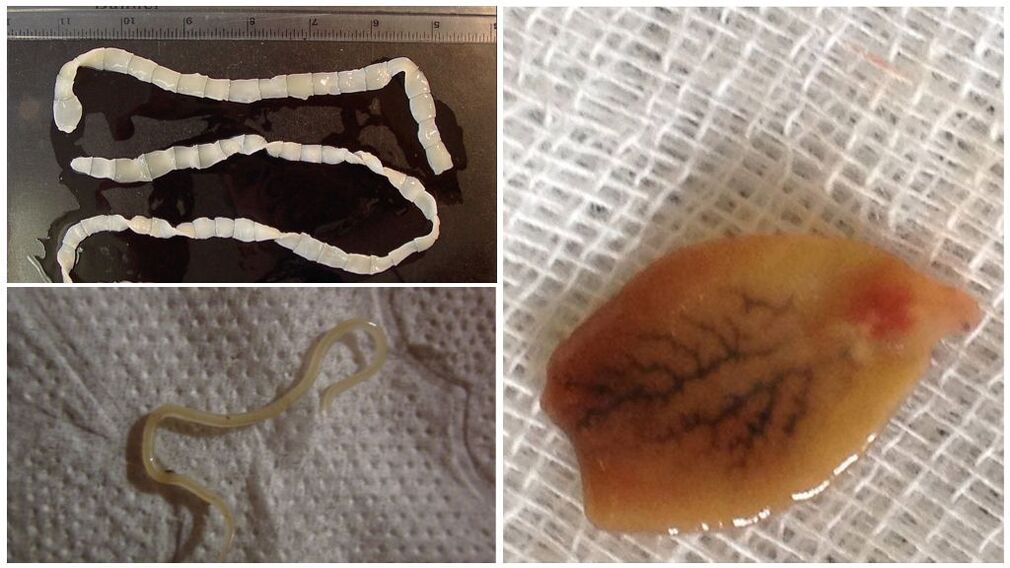
Note!
In addition to the general classification, there is an individual division of all types of parasites into types and classes.Protozoa can be represented by ciliates, sarcoids and amoebas.Worms are divided into flux, tape and round worms.Arthropods include insects, arachnids and bloodsuckers.
What parasites do people have?
Humans are equally often infected with protozoa and helminths.Insects are mainly diagnosed in socially disadvantaged individuals.Adults, unlike children, can be infected with all known parasites.This is because of the variety of diets and the possibility to travel.Many have been misled by the false belief that parasitic diseases are mainly diagnosed in childhood.They are actually more often discovered at a young age, but adults get sick no less often than children;their clinical signs of invasion may simply be hidden.
Protozoa and their localization
These single-celled parasites live in the body of adults for decades;they are studied by the science of protozoology.They can cause both specific infections and general diseases.Active individuals are called trophozoites and usually have flagella for locomotion.To continue the life cycle, protozoa have the ability to enclose themselves in capsules (cysts).These forms are immobile and persist in the external environment and adverse conditions for a long time.
Many species of flagellates parasitize adults.They have microscopic sizes and different locations:
- Trichomonas affects the genitourinary system, the oral cavity and the prostate gland in men;
- intestinal balantidia live in the lumen of the large intestine;
- Giardia parasitizes the liver, bile ducts, and intestines;
- malarial plasmodia destroys blood cells;
- toxoplasma spreads through the bloodstream to all organs, including the brain;
- trypanosomes attack the brain and cause "sleeping sickness";
- Leishmania settles in the lymph nodes, spleen, liver and bone marrow;
- Dysenteric amoebae live in the colon.
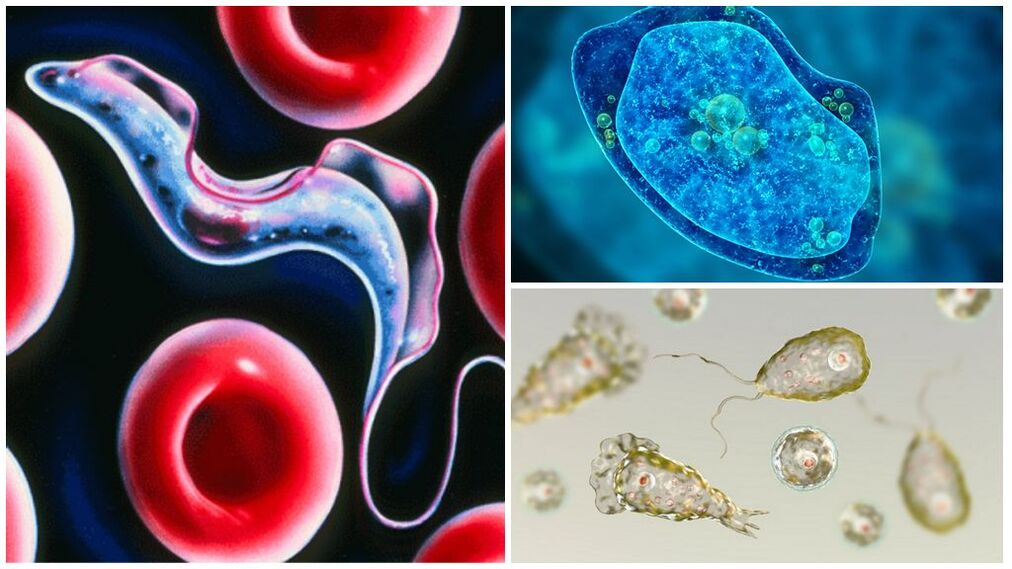
All types of protozoan parasites have a similar life cycle, which occurs by passing from the vegetative stage to the cyst stage.Reproduction in unicellular organisms occurs both sexually and asexually.
Note!
Protozoa are true parasites and in the trophozoite stage cannot exist without a permanent or intermediate host.
Diseases caused by parasites of the class of worms
The presence of round and flat worms is often detected in the body of adults.They differ in size, functional characteristics and the degree of negative impact on organs and systems.
nematodes
There can be several types of these parasites in humans.They belong to the class of roundworms and are similar in appearance to a finger.Worms feel free in the host's body and in an open environment.Among the common nematode pathogens:
- Ascaris.It lives in the small intestine, has a length of 20 to 40 cm and reproduces sexually.
- Penworm.A small worm, no more than 12 mm long.It affects the intestines and can lay up to 15,000 eggs per day.The male dies after mating, the female after laying the larvae.
- Breast worm.It lives in the jejunum and duodenum.This parasite inside a person can suck up to 0.3 ml of blood per day, damaging the intestinal wall with sharp teeth.
- The whipworm.The worm, up to 5 cm long, lives in the intestine and, thanks to its unique body structure, absorbs fluids from the thickness of its walls.
- Trichinella.This is an intramuscular parasite up to 4 mm in size that causes the dangerous disease trichinosis in humans.Trichinella looks like a spiral and is a living helminth.
- Guinea worm.This parasite in the human body reaches 1 meter in length and looks like a thin white thread.The location of the Guinea worm can be in the subcutaneous layer of the legs, back or at the bottom of the abdomen.
- Filaria.They enter the body through the bites of infected mosquitoes, flies and horse flies.The habitat of filariae is the entire circulatory and lymphatic system.They block the blood vessels of the heart, lungs and other organs, causing obstruction.
- Toxocara.The worm larvae migrate throughout the body and infect the heart, lungs, liver and brain.The size of adult helminths reaches 18 cm.
- Intestinal eel.The causative agent of strongyloidiasis lives in the intestines in the mature stage.Eel larvae can spread throughout the human body through the bloodstream.
Important!
The negative impact on the body of roundworms is due to their mechanical and toxic effects.
Trematodes
These are parasites that live in humans and have the second name of fluke.There are several types of these flatworms.They cause different diseases, but are similar in structure.All tufts have a leaf-shaped body with two suckers.Trematodes do not have an anus;digested food is thrown out through the mouth.
Trematode parasites affect the body depending on the location.Cat's liver, lancets and knives affect the liver, gall bladder and bile ducts.The pulmonary tube lives in the lungs, the blood lives in the blood vessels.
Note!
Flukes always have an intermediate host in the form of a variety of molluscs.
Cestodes
This type includes helminths from the class of tapeworms or tapeworms.They have a special structure and look like a chain of their individual fragments (strobilus).Cestodes parasitize the intestines and release large amounts of toxins into the body.
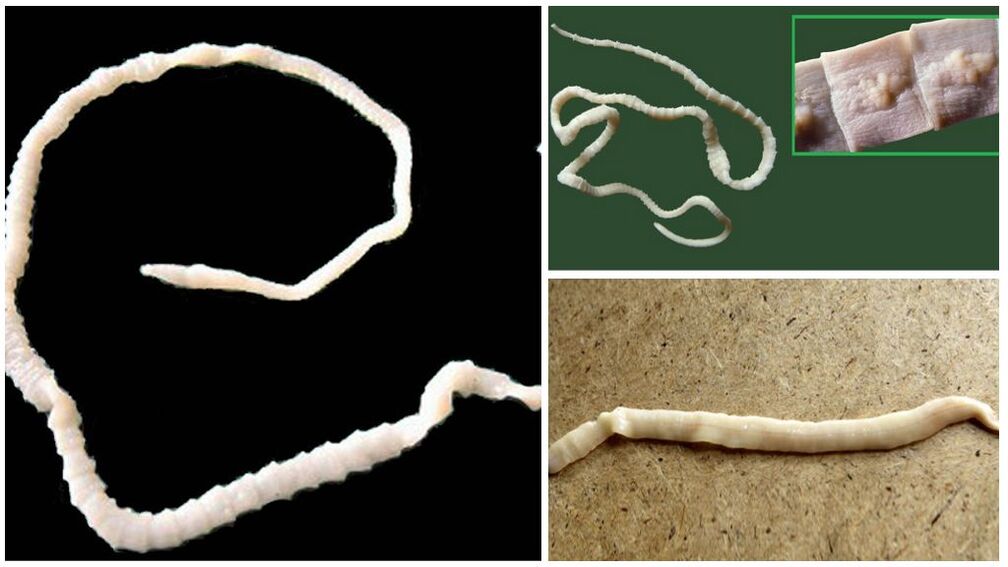
Among the worms of this class common in adults are:
- Wide band.The largest parasite, up to 15 meters long, absorbs nutrients throughout the body and poisons the body with its toxins.
- Pork loin.It causes taeniasis, reaches 3 meters in length and is "armed" with several hooks.
- The bull bar consists of more than a thousand segments and grows up to 10 meters.
- Dwarf tape.The size of the worm is not more than 5 cm;it lives in the human body for about 2 months and then dies.
- Echinococcus and alveococcus.Helminths cause liver and lung disease and can form larval blisters in internal organs.
Note!
Cestodes are particularly dangerous because of their ability to parasitize in the form of cysticerci.These are encapsulated larvae that are carried to all organs through the bloodstream, causing massive invasion.
External parasites
The most common ectoparasite that lives in the human body is the louse.It lives in the scalp, armpits, groin, chin, even in the eyelashes and eyebrows.The disease caused by parasites is called pediculosis.Depending on the location, body lice, pubic lice and head lice are distinguished.You can get rid of insects using external means in the form of shampoos, ointments and solutions.
Important!
The danger of lice lies in their ability to transmit typhoid, which is a serious infectious disease, through their saliva.
Symptoms of parasites in the human body
With external insects such as lice and fleas, everything is clear;manifested as local itching and formation of wounds at the bite sites.Internal parasites cause a more varied clinical picture.It depends on the localization of foreign organisms, their size and the degree of invasion.

Hundreds of worms and protozoa of the same or different species can parasitize humans at the same time.Parasites can live in humans unnoticed for several years and not cause specific symptoms.Common signs of infection usually include:
- nausea;
- vomiting;
- constipation or diarrhea;
- weakness;
- headache;
- changes in appetite towards its increase or decrease;
- anemia for no apparent reason;
- increased nervousness;
- sleep disorders;
- abdominal pain;
- perversion of taste.
With liver damage, the clinical picture is complemented by pain in the right hypochondrium, yellowing of the skin and bitterness in the mouth.Filariasis is manifested by signs of cardiac and respiratory failure, toxoplasmosis is accompanied by disturbances in the functioning of the central nervous system.With trichinosis, the muscles are affected.
When the genitourinary system is affected by protozoa, signs of infection in women are manifested by frequent urination, discharge from the vagina and urethra, and itching.With intestinal infections, symptoms of infection in adults may not appear for years, during which time the parasites multiply and weaken the human immune system, which contributes to the development of chronic and systemic diseases.
Symptoms of the presence of protozoa in the body often include fever, headache and allergic reactions.Often one of the first signs of parasites in the body is a rash on the body and itchy skin.This is due to the reaction of the human body to foreign proteins.
Important!
General signs of the presence of parasites in the body in the first stages can be similar to intestinal infection, dermatitis and digestive disorders.
Why are parasites dangerous?
In humans, infection with parasites can cause various reactions and complications.If the invasion is provoked by small helminths, then the risk of complications is quite small.When infected with large species of worms or highly pathogenic protozoa, damage to health can be unpredictable.

In addition to specific diseases, which sometimes have a severe course, foreign individuals cause serious dysfunction of vital systems.Toxins that parasites release into the blood affect the central nervous system and poison the body.Large helminths have a negative mechanical effect on organs.Many doctors believe that such tissue damage leads to oncology and tumors.In addition, parasites cause ulcerative lesions of the intestines and stomach, bronchitis and pneumonia, cystitis and pancreatitis, cholecystitis and colitis.
Important!
Sometimes the symptoms of large worms in adults can appear in the form of an acute abdomen.This happens when the worms damage the intestinal lining and develop peritonitis.
Sources of possible infection and preventive measures
There are many ways to get infected with parasites.People are exposed to infection every day.When you eat undercooked meat and fish, there is a risk of contracting helminths such as fluke and trichinella.If you don't wash your hands or fruits and vegetables well enough, you can put the eggs of tapeworms, roundworms, tapeworms and other worms in your mouth.When you visit exotic countries, you can become infected with rare parasites such as guinea worm, malarial plasmodium and trypanosomes.
Carriers of infection are domestic and wild animals, bloodsuckers, crustaceans and molluscs, as well as ants.Prevention consists in reducing the risk of infection by maintaining hand hygiene and proper thermal treatment of meat and fish products.
Important!
Lovers of tourism should first study the ways of infection by parasites living in a certain place.
Diagnosing
Sometimes it is possible to detect an invasion in the body simply by submitting biological fluids and feces for analysis, as well as studying the anamnesis.But not all parasites show clinical symptoms and form larvae.Therefore, PCR and ELISA are recognized as the best diagnostic methods.These are immunological tests that can detect the DNA of parasites and antibodies to them in the venous blood.
Computer diagnostics are also popular now, but they only help to prove the fact of infection, without identifying the specific pathogen.Now blood hemoscan is also required, which is performed by continuously magnifying the biological material.

Duodenal intubation helps to find out everything about parasites in the liver.During the procedure, bile is collected followed by laboratory analysis.In the case of echinococcosis in the stage of blistering in the liver and lungs, the body is diagnosed using ultrasound, MRI and X-rays. During colonoscopy, intestinal specimens can be seen.
Important!
Modern techniques make it possible to detect the invasion already when the first signs of infection appear, therefore, to prevent the development of complications, you should consult a doctor as soon as possible.
Therapy methods
To fight the invasions, they use the medicinal treatment of parasites in the human body, a diet that limits flour, sweets, alcohol, as well as proprietary techniques.A collection of cloves, tansy and wormwood helps fight disease.The method based on drinking sweet tea with cognac (1 tablespoon per glass) on an empty stomach, followed by the use of a laxative, has also proven itself.
Medicines in the pharmacy for parasites are available in the form of suspensions, tablets, suppositories and solutions for injection.For protozoa, adults are prescribed antiprotozoal drugs.
Parasites should be treated for up to 5 days.
To remove worms such as roundworms with medication, a single use of anthelmintic tablets is sometimes sufficient.They destroy the worms from the inside, paralyzing their muscular system.It is more difficult to cure a person from flukes, echinococci and alveococci.The course of treatment for the body sometimes lasts up to 6 months.
To get rid of parasites permanently, you must take medications according to the regimen prescribed by your doctor.
Important!
Self-medication with pharmaceutical drugs is not highly recommended due to the possible worsening of the condition.Sometimes the first signs of parasite death are manifested by the release of toxins into the blood, which requires additional detoxification therapy.
Treatment with folk remedies
If parasites appear in the body that cause specific infections such as malaria, toxoplasmosis or trichomoniasis, treatment with home recipes is out of the question.In these cases, qualified medical assistance is required.
Note!
Traditional medicine can be used for preventive purposes or as adjunctive therapy.
To get rid of infections, natural remedies based on herbs, flowers and products with a high content of essential oils are used.
You can be treated for parasites:
- infusion of wormwood (one tablespoon per liter of boiling water);
- tansy decoction (20 grams of herb per 500 ml of boiling water);
- garlic milk (one head of garlic for 250 ml of hot milk);
- onion porridge (cut two onions and mix with vegetable oil);
- candy made from pumpkin seeds (mix a glass of seeds with half a glass of honey);
- pumpkin puree (steam 1 kg of pulp in the oven for an hour and puree).
Natural remedies should be consumed for at least 10 days, one tablespoon before each full meal.
Reviews about the treatment of parasites
- "I feed my whole family pumpkin seeds. I dry them at room temperature, mix them with some jam, condensed milk or honey and serve them with tea. As a result, no one suffers from parasites."
- "My husband had abdominal pain near the navel for a whole year, suffered from nausea, did many tests and found nothing. Recently, a doctor in a paid clinic wrote a prescription for a broad-spectrum anthelmintic drug, my husband took a tablet and after a week the pain stopped."
- "For the purpose of prevention, every autumn I take an anthelmintic drug, since at the dacha I sometimes eat vegetables directly from the bush. The suspension is cheap, tastes good and is well tolerated."